Quantum Supremacy and the Race for New World Power
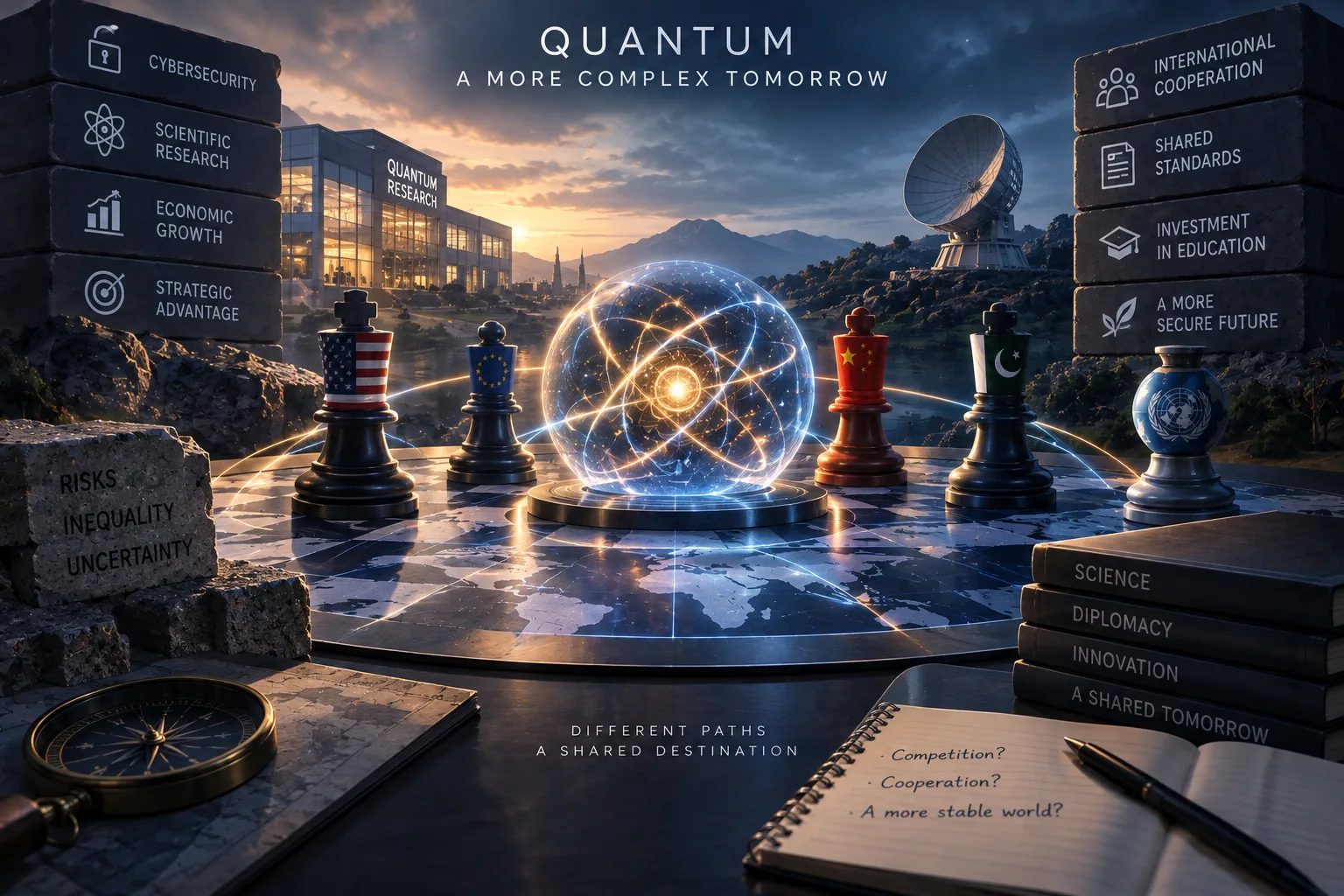
Quantum computing could transform cybersecurity, scientific research, economic competition, and the balance of technological power between countries. The article examines the risks of a growing quantum divide while arguing that international cooperation, shared standards, and investment in education will be important alongside competition.
Quantum Supremacy and the Race for New World Power
By: Ali Abdullah
In 2019, Google’s 53-qubit Sycamore processor solved a problem in 200 seconds that researchers claimed would have taken the world’s most powerful supercomputer 10,000 years. That moment – billed as “quantum supremacy” – signaled a turning point. Even though IBM later argued the same task could be done in days on a classical machine, the headline was clear: a new tech race had begun. Quantum computers, once lab curiosities, were on the verge of practical breakthroughs. If one nation or company achieves a substantial advantage, it could reshape everything from encryption security to economic competitiveness. This is the hook that makes quantum computing a story worth following closely.
Quantum computing matters because it threatens to break many of the security and economic assumptions of today. Most online privacy and financial transactions rely on public-key cryptography – math problems (like factoring large numbers) that classical computers struggle to solve. But a powerful quantum computer could solve them easily, effectively “breaking” the encryption. In response, standards bodies around the world are already adopting new “post-quantum” cryptographic algorithms to protect data in advance. In short, anything encrypted today – from your bank account to government secrets – must be re-encrypted with quantum-safe methods, or it risks exposure in the future.
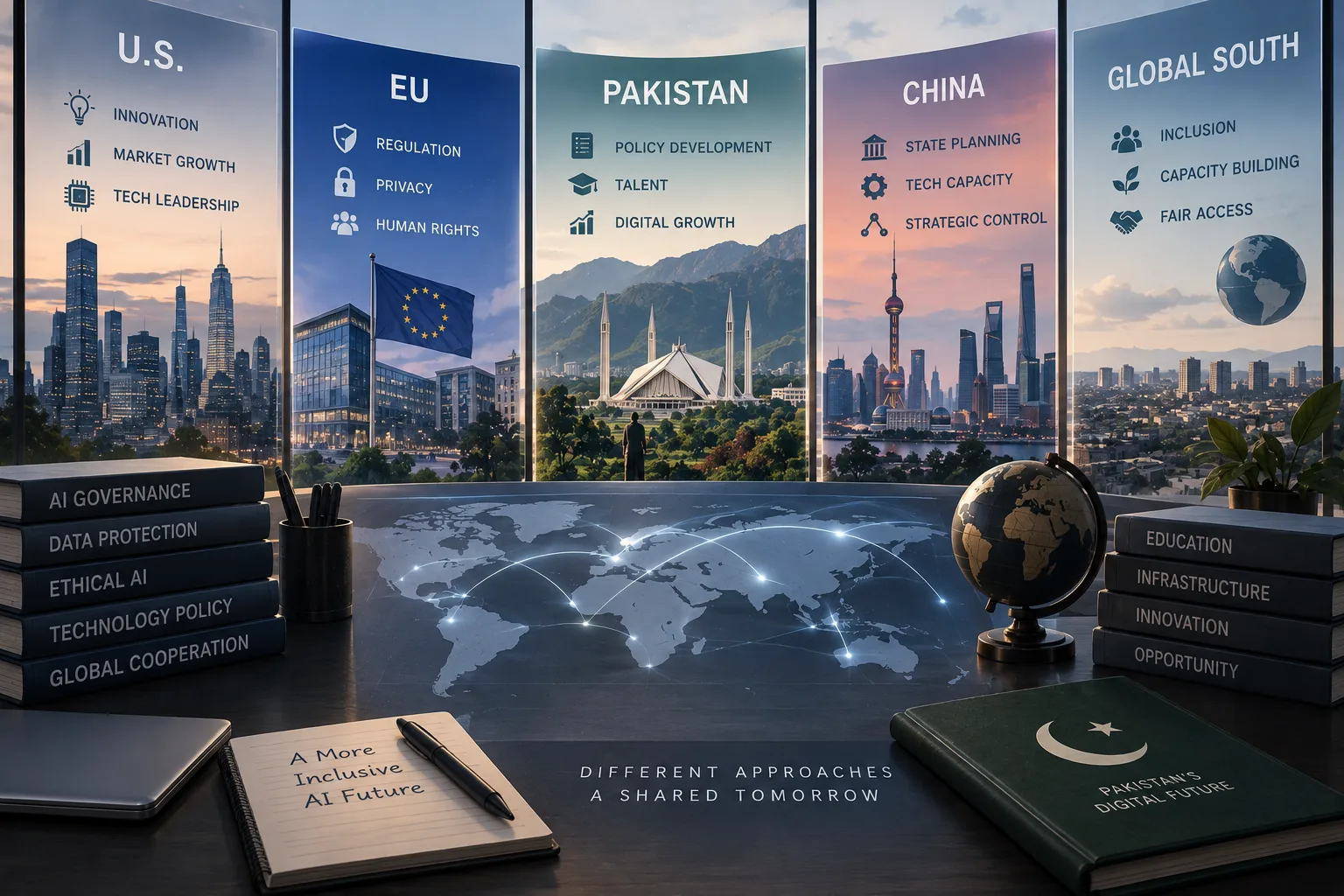
Emerging economies are also stepping in. Pakistan, for instance, approved a National Center for Quantum Computing (NCQC) in May 2025 . The government described quantum tech as essential for cybersecurity, AI, drug discovery and climate work, and warned that Pakistan must invest in talent now or face a strategic lag. This is telling: even countries with limited budgets recognize that a “quantum gap” could widen global inequalities. UNESCO and others emphasize the need to build capacity in the Global South and avoid leaving most nations dependent on imported quantum tools. Similarly, India’s mission is not only funding mid-scale quantum processors (tens to hundreds of qubits) but also networks for secure quantum communication between cities. The takeaway is that quantum technology is treated as a broad national capability – one that requires training scientists, updating curricula, and joining international research consortia even before any finished product arrives.
Alongside the promise lie several challenges. The clearest risk is security: as noted, a quantum computer capable of breaking today’s encryption would put privacy and digital infrastructure at grave risk. Policymakers worry about “Q-day,” when archives of intercepted encrypted data become readable. That threat drives the push for quantum-resistant cryptography now, rather than later. A related challenge is the quantum divide. Quantum hardware relies on exotic materials and precise fabrication, so only a few countries may dominate those supply chains. If just a handful of actors control the core expertise and standards, others will be forced into deep dependence. This could mimic a new kind of digital colonialism: leaders reap most of the economic and scientific rewards, while clients pay license fees or buy services. As scholars warn, without intervention the world risks drifting into a ‘quantum divide,’ in which a select few accumulate disproportionate advantages. The consequences would extend beyond defense and encryption: imagine new drugs, AI models or manufacturing techniques concentrated in one region while others fall behind.
Still, many experts argue that competition and cooperation can coexist. Quantum science has always been collaborative. Early breakthroughs (like lasers and transistors) were shared internationally, and many researchers move between countries or partner across borders. Even today, labs publish open benchmarks and universities cooperate on research projects. There are concrete ways to cooperate now: for example, agreeing on a common suite of post-quantum encryption standards benefits everyone . Sharing research on error correction or hardware validation can help all players avoid blind alleys. International organizations are taking note. In 2024 the UN declared 2025 the International Year of Quantum Science and Technology, an initiative aimed at promoting quantum awareness and global partnerships. UNESCO’s plans specifically highlight capacity-building in the Global South, gender equity in the field, and bridging the “quantum divide”. Such efforts underscore that the physics – and the policy – is global. History suggests that major technologies (from nuclear energy to aviation) ultimately needed shared rules and norms. If meaningful breakthroughs are to be safe and beneficial, governments will need to align on ethics, standards, and supply-chain transparency even as they race in their labs.
Quantum computing is no longer a distant dream, but a coming reality with broad societal impact. The goal for any country or company should not be to win a secret arms race of hoarded qubits, but to lead by example: shaping open standards, educating skilled workers, and channeling new capabilities into public good. The measure of quantum supremacy will not be who boots up the largest machine, but who uses these tools to help people. Can quantum enable better healthcare, cleaner energy, secure communication, and fairer economies? Will it help bridge global disparities instead of widening them? Those outcomes depend on choices made today. As Pakistan’s minister noted, technology sovereignty requires investing in people and institutions now. Likewise, the UN quantum year emphasizes inclusive progress. In the end, the race for quantum power should not be about domination or fear. It should be about harnessing a new frontier of science for shared security, opportunity and understanding – building a smarter, more cooperative world.